The notebook I never kept
I always meant to write things down. When I planted the apple tree, I told myself I would note the date. When I added the rosemary by the back door, I thought I should record where it came from. When the hydrangea finally established itself after two difficult years, I wanted to remember that story.
But I never did. The notebook stayed empty. The notes app on my phone had a few scattered entries that made no sense months later. And every spring, I found myself standing in the garden wondering: when did I plant that? How old is it now? Was it always in that spot?
The permanent things in my garden had no memory. They just existed, and I had to rely on my own fading recollection to piece together their history.
A place for everything that stays
I started using Leaftide to track my vegetables, but I quickly realised it could do something else: keep a record of the plants that do not get cleared at the end of each season. The fruit trees, the roses, the herbs that come back year after year.
Each one gets an entry. I give it a name, note the variety if I know it, and record when it was planted. I can add where it lives in the garden and attach a photo. It sounds simple, but having it written down in one place changed how I relate to those plants.
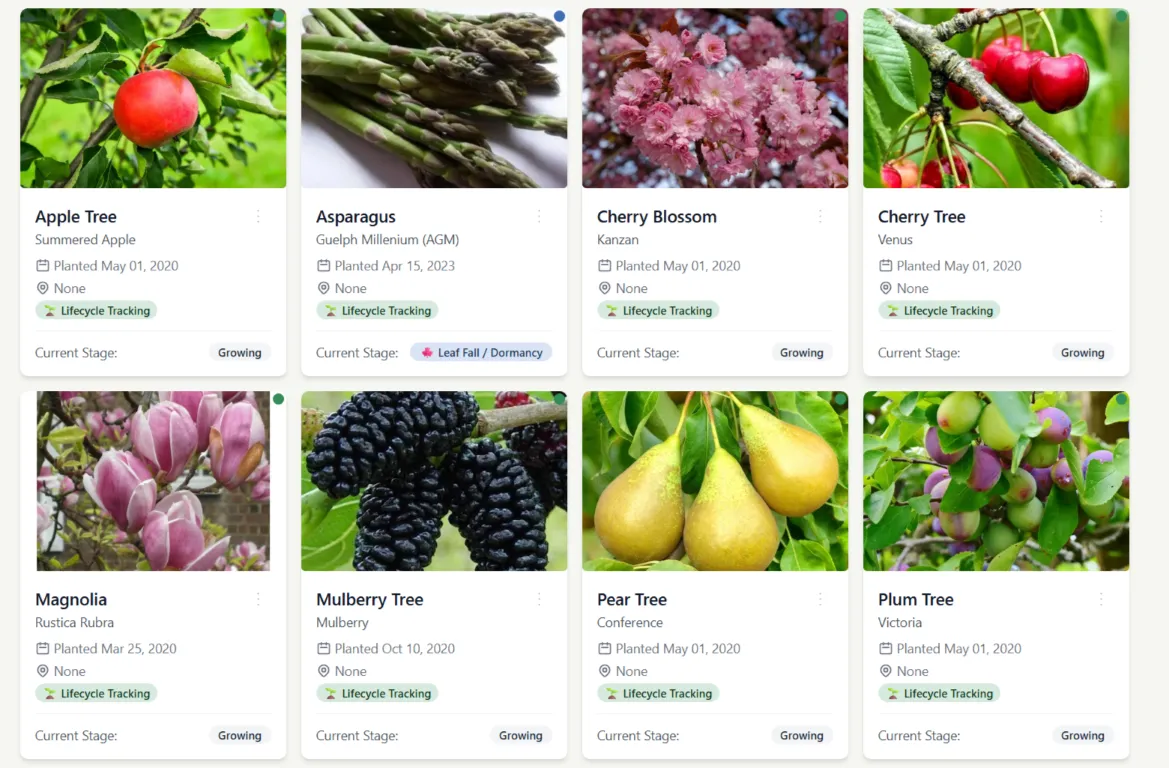
The permanent garden catalog with all my long-term plants in one view
Now when someone asks how old the apple tree is, I can tell them. When I want to remember which rose variety struggled in its first year, I can look it up. The garden has a memory that does not depend on mine.
More than just a list
What surprised me was how much context builds up over time. Each plant has a small history attached to it. I can see when I pruned it, when it flowered, when I noticed a problem. It is not just a catalog of names and dates but a living record of what has happened.
The apple tree entry now shows three years of flowering dates. I can see that it blooms a little earlier each spring. The rosemary has a note from last winter when I thought it had died, followed by another note when it came back. The hydrangea has a record of the year I moved it to a shadier spot and how much better it did afterwards.
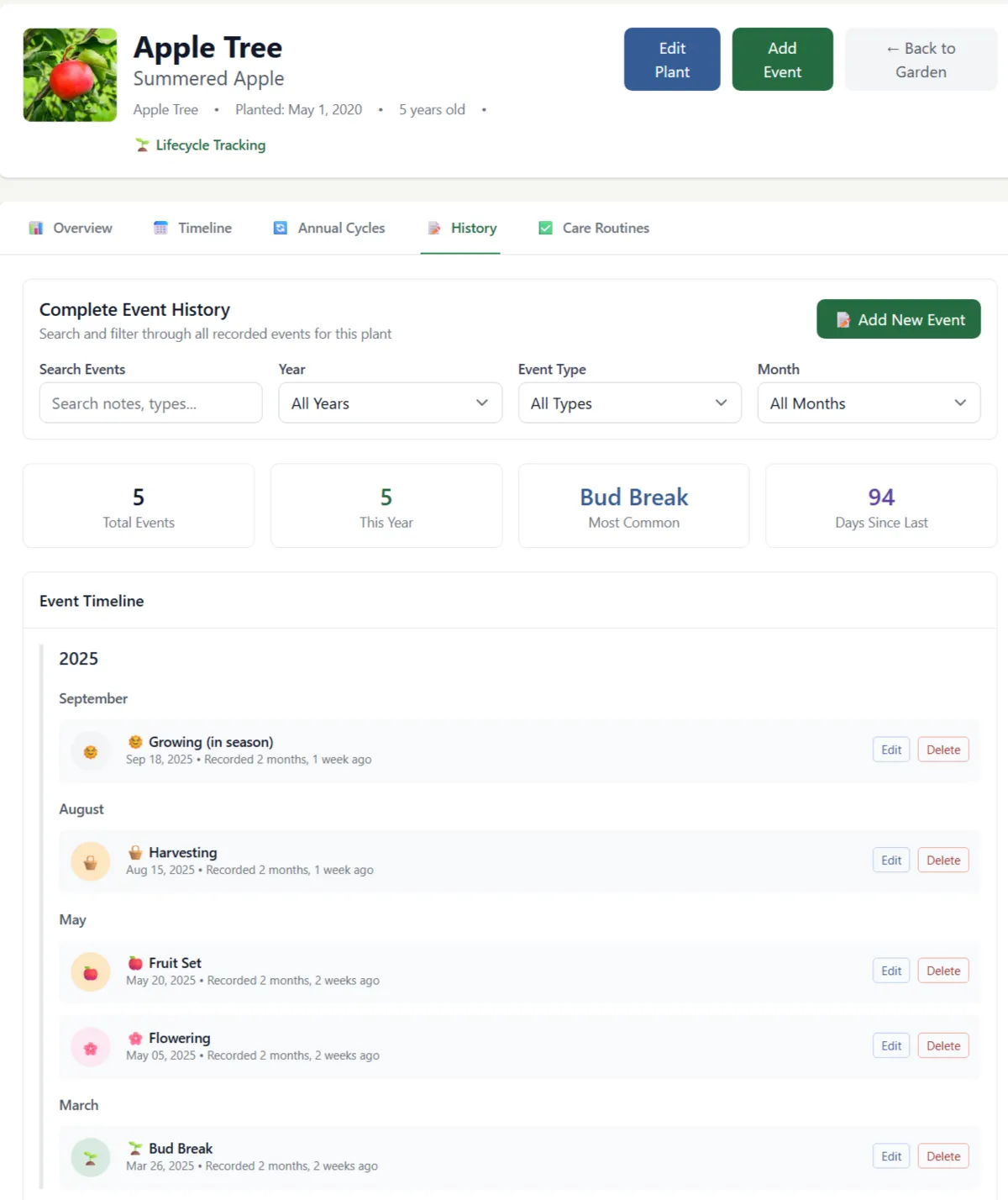
A plant’s detail page showing when it was planted and key events over time
This is the kind of information I would never have kept in a notebook. It accumulates naturally as I use the system, and it is there when I need it.
The plants I used to overlook
Before I had this catalog, I paid most of my attention to the vegetables. They demanded it. Sowing dates, transplanting, harvesting. The permanent plants just sat there, doing their thing, and I rarely thought about them unless something went wrong.
Now I notice them more. The thyme by the path has been there for four years. The pear tree is entering its fifth season and should start producing properly soon. The lavender that looked sparse last year has filled out nicely.
Having a record makes me pay attention. It is the same effect I noticed with the stage reminders for annuals, but stretched across years instead of weeks. The catalog creates a reason to look, and looking creates care.
What this gives me
I do not use the catalog every day. But when I need it, it is there. When I am planning where to put something new, I can see what is already established and how long it has been growing. When a plant is struggling, I can look back and see if this has happened before. When I want to buy another rose, I can check which varieties I already have.
It is a quiet kind of usefulness. The garden feels more coherent because I know what is in it. The permanent plants have names and histories, not just shapes in the soil.
What this means in practice
I do not check the catalog every day, but when I need it, the information is there. I know what I have, where it is, and how long it has been growing. That is all I ever wanted from the notebook I never kept.
Track your permanent plants with Leaftide.