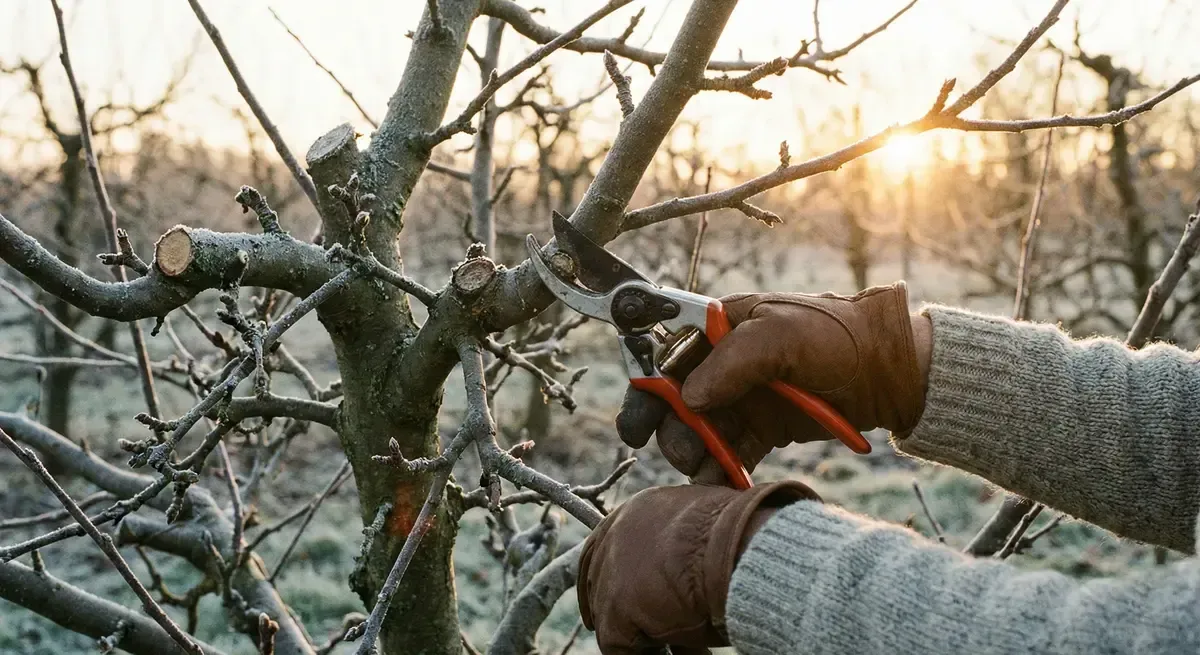
I spent my first winter as an apple tree owner staring at my young Bramley, secateurs in hand, paralysed by conflicting advice. One book said November, another insisted on February, and a neighbour swore by March. I eventually pruned in mid-January, convinced I had ruined everything. The tree leafed out beautifully that spring, and I learned that apple tree pruning has a generous window — but understanding why that window exists makes all the difference.
The confusion around timing is understandable. Unlike annual vegetables with their neat planting calendars, fruit trees operate on biological signals that shift with climate, tree age, and training method. Get the timing right and you work with the tree’s natural rhythms. Get it wrong and you waste the tree’s energy, invite disease, or remove the wood that would have fruited this year.
Quick Answer
Prune freestanding apple trees during winter dormancy, from leaf fall to bud break. In USDA zones 6-7, this typically means January to early March. Zones 4-5 should wait until February or March after extreme cold passes. Zones 8-9 can start in December. Summer pruning (July to August) is reserved for trained forms like espaliers and cordons, where the goal is to restrict growth rather than promote it. The exact timing depends on your local climate and the tree’s biological signals.
Why winter pruning works
Apple trees enter dormancy after leaf fall, shutting down active growth and storing energy in their roots and woody tissue. This dormant period is when pruning causes the least stress. The tree is not actively transporting nutrients, so cutting branches does not interrupt vital processes.
Winter pruning also promotes vigorous growth the following spring. When you remove branches, you reduce the number of buds competing for the tree’s stored energy. The remaining buds receive a larger share of resources and grow more strongly. This is exactly what you want when establishing a young tree’s framework or rejuvenating an old one.
Disease risk is lower in winter. Fungal spores like apple canker and silver leaf are less active in cold, dry conditions. Wounds made in winter have time to begin callusing before the growing season starts, reducing the window for infection. This is why autumn pruning — when leaves are falling but the tree is still physiologically active — is generally avoided.
Tools You'll Need
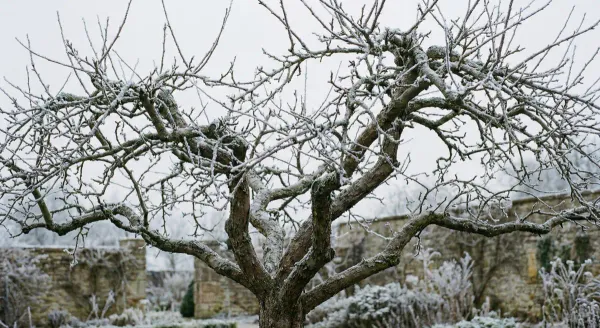
Sharp bypass secateurs handle branches up to 2cm thick — I keep mine sharpened after every few trees. For anything thicker, use a pruning saw rather than forcing the secateurs. Loppers are useful for medium branches in awkward spots where a saw won’t fit. Keep a jar of diluted bleach or rubbing alcohol for sterilising blades between trees, especially if you spot any signs of disease.
Timing by climate and region
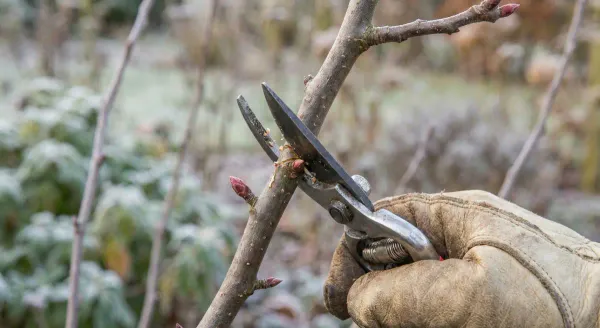
The dormant window shifts depending on your local climate. In milder regions, dormancy starts earlier and ends later. In colder areas, the window is compressed but still workable.
| USDA Zone / Region | Pruning Window | Notes |
|---|---|---|
| Zones 8-9 (Pacific Northwest, Southern states) | December to early March | Mild winters allow early starts |
| Zones 6-7 (Mid-Atlantic, lower Midwest) | January to early March | Standard window for most temperate regions |
| Zones 4-5 (Upper Midwest, mountain states) | February to March | Wait for extreme cold to pass |
| UK: South West England | Late November to early March | Similar to zones 8-9 |
| UK: Most of England | December to late February | Similar to zones 7-8 |
| UK: Scotland | February to March | Similar to zones 5-6 |
The key is not the calendar date but the tree’s state. If your tree still has leaves in November, it has not entered full dormancy. If buds are swelling and showing green in February, dormancy is ending. Watch the tree, not just the calendar.
Regional Variation
Your microclimate matters more than broad zone designations. A sheltered urban garden in zone 6 may have a longer pruning window than an exposed rural site in zone 7. Track when your trees enter and exit dormancy over several years to find your specific window.
Summer pruning for trained forms
Summer pruning serves a completely different purpose and applies only to trained forms — espaliers, cordons, fans, and step-overs. These are trees deliberately restricted in size and shape, often grown against walls or on wires.
The timing is July to August in most temperate climates, after the main flush of spring growth has matured but before the tree begins preparing for dormancy. You are cutting back the current season’s new shoots to three leaves above the basal cluster (the rosette of leaves at the shoot’s base). This stops the shoot from extending further and encourages the formation of fruit buds for next year.
Summer pruning restricts growth. Winter pruning promotes it. If you summer-prune a freestanding tree, you will weaken it and reduce fruiting. If you winter-prune a cordon, you will stimulate vigorous new growth that defeats the purpose of the restricted form.
I learned this the hard way with an espalier ‘Egremont Russet’. I winter-pruned it like my freestanding trees and spent the following summer battling three-foot water shoots. The tree looked like it was trying to escape its wires. A proper summer pruning the next year brought it back under control.
Formative vs maintenance pruning
Young apple trees in their first three to four years need formative pruning to establish a strong framework. You are selecting the main scaffold branches, removing competing leaders, and creating an open centre that allows light and air to reach all parts of the tree.
Established trees need maintenance pruning. You are removing dead, diseased, and damaged wood (the three Ds), thinning out crossing or rubbing branches, and keeping the centre open. The cuts are smaller and less dramatic.
The timing is the same for both — winter dormancy — but the approach differs. Formative pruning is more aggressive, often removing 30-40% of the tree’s growth in a single year. Maintenance pruning is gentler, typically removing 10-20% annually.
Neglected trees present a special case. If you inherit an overgrown apple tree that has not been pruned in years, resist the urge to restore it in one session. Removing too much wood in a single year shocks the tree and stimulates excessive water shoot growth. Spread the work over three years, removing the worst congestion first and gradually opening the canopy.
What to look for
Biological signals tell you when to start and stop pruning more reliably than any calendar.
Leaf fall is your starting signal. Once the tree has dropped all its leaves, it has entered dormancy. Some varieties hold onto a few leaves longer than others, but when 95% of the foliage is gone, you can begin. Do not prune while leaves are still attached — the tree is still photosynthesising and moving nutrients.
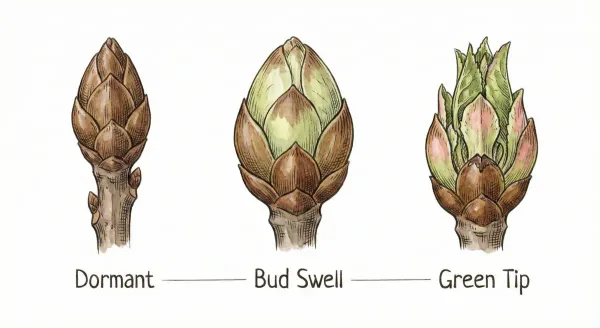
Dormant buds are tight, brown, and show no sign of swelling. This is your safe pruning window. The buds are alive but inactive, waiting for the right temperature and day length signals to break.
Bud swell is your stop signal. When buds begin to enlarge and you can see green or pink tissue at the tips, dormancy is ending. Pruning after this point wastes the energy the tree invested in those developing shoots. If you must prune late, prioritise dead wood removal and leave structural cuts for next year.
Green tip means you have definitely missed the window. The buds have broken and leaves are emerging. Put the secateurs away until next winter, or until July if you are working with trained forms.
Month-by-month pruning calendar
| Month | What to Do |
|---|---|
| November | Leaf fall begins. Start checking for full dormancy. |
| December | Pruning can begin in zones 8-9 and mild UK regions once leaves have dropped. |
| January | Main pruning window opens for most temperate climates. Ideal time for structural work. |
| February | Continue pruning. Watch for early bud swell in mild years. |
| March | Final chance in colder zones. Stop if buds are swelling. |
| April-June | No pruning. Let the tree grow and fruit. |
| July-August | Summer pruning for trained forms only (espaliers, cordons, fans). |
| September-October | No pruning. Disease risk is high and the tree is still active. |
Common mistakes
Pruning too late is the most common error. By April, most apple trees in temperate climates have broken bud. Cutting branches at this stage removes the new growth the tree spent energy producing. If you realise in April that you forgot to prune, leave it until next winter unless you are dealing with broken or diseased wood that poses an immediate risk.
Autumn pruning invites disease. The tree is still physiologically active in September and October, and fungal spores are abundant. Wounds made in autumn do not heal as quickly as those made in winter, giving pathogens more time to establish. If you must remove a broken branch in autumn, make a clean cut and monitor it closely for signs of infection.
Removing too much from a neglected tree in one year stimulates a forest of water shoots — vigorous, vertical growth that produces no fruit and clutters the canopy. I have seen gardeners remove half the wood from an overgrown tree in February, only to spend the following summer cutting out dozens of water shoots. Spread heavy renovation work over three winters.
Pruning trained forms in winter defeats their purpose. If you winter-prune an espalier, you will get vigorous regrowth that breaks the form. Summer pruning is not optional for these trees — it is how you maintain their shape and encourage fruiting.
Disease Timing
Apple scab and fire blight are most active during wet spring weather. If your region experiences heavy spring rains, finish pruning before bud break to minimise open wounds during peak infection periods. Clean your tools between trees with a 10% bleach solution or rubbing alcohol.
After you prune
Do not apply wound paint or sealant to pruning cuts. Research consistently shows that these products do more harm than good — they trap moisture and create ideal conditions for fungal growth. Apple trees seal wounds naturally through callusing, forming a protective barrier over the cut surface. This process works best when the wound is left exposed to air.
Monitor your cuts over the following weeks, especially if you pruned during wet weather. Look for signs of infection like canker (sunken, discoloured bark), unusual discolouration around the wound, or weeping sap. Catching problems early makes them easier to manage.
Water established trees if the following spring turns dry. Pruning stimulates new growth, and those developing shoots need moisture to establish properly. A deep watering every two weeks during dry spells helps the tree recover from pruning and supports healthy regrowth.
Expect some water shoots from heavy cuts — vigorous, vertical growth that sprouts near large pruning wounds. These can be rubbed off when they are small and soft in summer, which is easier than waiting until next winter when they have hardened into woody stems. I check my trees in June and July and remove any water shoots I can reach by hand.
What to record in your pruning log
Every time you prune an apple tree, note the date, what you removed, and the tree’s condition. This record becomes invaluable when planning next year’s work.
I record which branches I removed (using simple sketches or photos), how much wood I took off (light, moderate, or heavy), and any signs of disease or pest damage. The following winter, I can see what I did last year and adjust my approach. If I pruned heavily and got excessive water shoots, I know to prune more lightly this year. If I pruned lightly and the canopy is still congested, I can be more aggressive.
A pruning log also helps you track the tree’s response to different timing. If you pruned in early December one year and late February the next, you can compare the results and refine your approach for your specific microclimate.
For a detailed guide on what to record and how to use that information, see our article on keeping a fruit tree pruning log.
Never forget when you pruned
Free for up to 30 plants. No card needed.
Sources and further reading
University extension services provide detailed guidance on apple tree pruning timing and techniques:
- Penn State Extension: Pruning Fruit Trees
- Oregon State Extension: Training and Pruning Your Home Orchard
- University of Minnesota Extension: Pruning Apple Trees
The Royal Horticultural Society also provides comprehensive guidance for UK gardeners:
For related timing guidance, see our articles on when to prune pear trees, when to prune cherry trees, when to prune peach trees, and when to prune plum trees, and how to use Leaftide’s permanent plant tracking to manage all your fruit trees in one place.