How to Grow Lords and Ladies
Arum maculatum
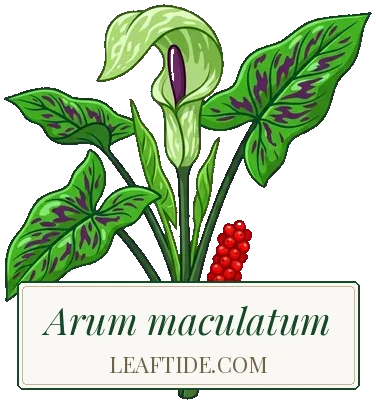
Lords and Ladies is a hardy tuberous perennial for shaded woodland gardens. Plant tubers in autumn in moist, humus-rich soil under trees or in a north-facing border. The leaves appear in late winter to early spring, the hooded pale-green spathe and purple spadix follow in April and May, and the foliage dies down by midsummer, leaving a spike of berries that ripens bright orange-red in late summer and early autumn. All parts are highly toxic, so wear gloves when handling it and keep children and pets away. It self-seeds freely; remove the berry spikes if you want to limit its spread.
 In your Leaftide garden

- Height
- 40 cm
- Spread
- 30 cm
- Flowers
- April - May
- Light
- Part to full shade
- Water
- Moderate
- Feed
- Annual compost mulch
- Prune
- Remove spent foliage when it yellows
Yearly Lifecycle
Watch For
- Vine weevil grubs on tubers
- Slugs on emerging leaves
- Grey mould (Botrytis) in wet conditions
Pet Safety
Care Requirements
Light
Shade to partial shade
Thrives in dappled shade under deciduous trees or in north-facing borders. Tolerates deep shade but flowers best with some indirect light in spring.
Watering
Moist but well-drained soil
Needs consistently moist, humus-rich soil. Water in dry spells while leaves are present. Tolerates drier conditions during summer dormancy.
Fertilizing
Annual compost mulch
Top-dress with leaf mould or well-rotted compost in autumn, while the tubers are resting and before the new leaves push through. Established plants need no other feeding.
Pruning
Remove spent foliage when it yellows
Cut back yellowing leaves as they die down in early summer. Wear gloves, as all parts are toxic. Remove the berry spikes before they ripen in late summer if self-seeding is unwanted.
Spacing
25–30 cm apart
Plant tubers 10 cm deep and 25–30 cm apart. Allow for spreading via self-seeding over time in woodland conditions.