How to Grow Begonia
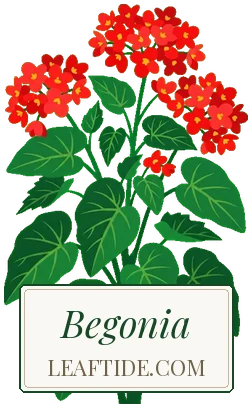
Begonia
Sow begonia seeds on the surface of moist compost in January-February at 21°C — they need light and are extremely slow to start. Alternatively, start tuberous types from dormant tubers in March. Plant out after the last frost into partial shade, spacing 20-25 cm apart. Water at soil level, feed fortnightly, and deadhead regularly. Lift tuberous types after the first frost and store dry over winter.
 In your Leaftide garden
 - Hardiness
- Tender
- Season
- Warm Season
- Harvest
- Continuous Harvest
- Spacing
- 25 cm
- Height
- 30 cm
- Min. soil temperature
- 18°C+
- Start from
- Seed
- Light
- Part to full shade
- Water
- Moderate
When to Start
Start seeds indoors 12 weeks before your last frost date. Transplant outdoors once night temperatures stay above 10°C and soil has warmed to at least 18°C.
Don't know your frost date? Find it here →
Growth Stages
Approximate days from start
Care Essentials
- Balanced liquid feed fortnightly during the growing season.
- Excellent for shade. Tuberous begonias give the most spectacular flowers. Don't overwater.
Growing Conditions
- Min. soil temperature
- 18°C+
- Germination temperature
- 21–25°C
Pet Safety
- Sow indoors
- —
- Transplant out
- —
- First harvest
- —
Want your full season plan with reminders? Set up your garden free


Spacing & Planting
| Plant spacing | 25 cm |
| Row spacing | 25 cm |
| Sow depth | 0 cm |
| Mature height | 30 cm |
| Mature spread | 25 cm |
Versatile bedding plant for shade and partial shade. Tuberous types need lifting in autumn. Semperflorens types are seed-grown annuals. Excellent for containers and borders.
Pests & Diseases
Pest Vine Weevil
Identification: Adults are dull black beetles with a long snout, active at night. Larvae are white C-shaped grubs with brown heads found in compost around roots. Plants wilt despite moist soil.
- Nematode biological control (Steinernema kraussei) applied to compost in late summer
- Hand-pick adults at night with a torch
- Check root balls when repotting and remove grubs
- Systemic vine weevil drench for containers
Pest Slugs and Snails
Identification: Irregular holes in fleshy leaves and stems, slime trails, worst in wet weather
- Beer traps
- Copper tape around containers
- Evening hand-picking
- Nematode biological control
- Ferric phosphate slug pellets
Pest Aphids
Identification: Small green or pink insects clustering on soft new growth and flower buds, sticky honeydew on leaves
- Insecticidal soap spray
- Encourage natural predators
- Wipe off with a damp cloth
- Fatty acid sprays
Pest Mealybug
Identification: White cottony masses in the leaf axils and on stems
- Dab with methylated spirits
- Insecticidal soap
- Vegetable-oil-based insecticide
Disease Powdery Mildew Erysiphe spp.
Symptoms: White powdery coating on leaves and stems, leaves may curl and distort
Treatment: Remove badly affected leaves, improve air circulation
Prevention: Avoid overhead watering, ensure good spacing, water at soil level
Disease Grey Mould (Botrytis) Botrytis cinerea
Symptoms: Fuzzy grey mould on flowers, leaves, and stems, often starting on dead or damaged tissue
Treatment: Remove affected parts immediately, improve ventilation and reduce humidity
Prevention: Remove spent flowers and dead leaves promptly, avoid overcrowding, water at soil level
Disease Stem Rot
Symptoms: Soft, rotting stem bases; the plant collapses
Treatment: Remove the affected parts. Reduce watering. Improve drainage
Prevention: Do not overwater. Ensure good drainage. Do not plant too deep
Growing Conditions
| Min. soil temperature | 18°C |
| Germination temperature | 21–25°C |
| Photoperiod sensitivity | day neutral |
Frequently Asked Questions
- How far apart should I plant Begonia?
- Plant Begonia 25cm apart with 25cm between rows.
- When does Begonia flower?
- Begonia typically flowers approximately 60 days after transplanting.
- Is Begonia frost hardy?
- Begonia is classified as Tender.