How to Grow Borage
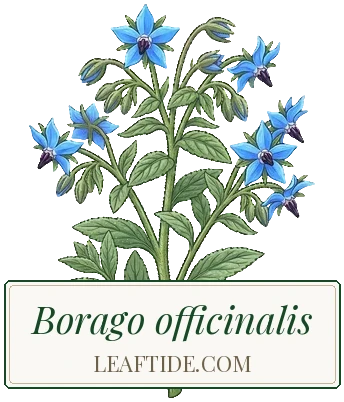
Borago officinalis
Borage is a fast-growing hardy annual with vivid blue star-shaped flowers beloved by pollinators. Sow directly where it is to grow — it dislikes transplanting — in any reasonable soil in a sunny spot. It needs almost no feeding or watering once established, and flowers within eight weeks of sowing. Deadhead regularly to prevent aggressive self-seeding, or leave a few plants to self-seed for next year.
 In your Leaftide garden

- Hardiness
- Hardy
- Season
- Any Season
- Harvest
- Continuous Harvest
- Spacing
- 30 cm
- Height
- 60 cm
- Sow depth
- 1.5 cm
- Min. soil temperature
- 7°C+
- Start from
- Seed
- Light
- Full sun to part shade
- Water
- Low
When to Start
Direct sow outdoors as soon as soil reaches 7°C — typically early to mid spring. Hardy enough to tolerate light frosts.
Don't know your frost date? Find it here →
Growth Stages
Approximate days from start
Care Essentials
- Borage rarely needs feeding in average soil; on poor soil apply a balanced liquid feed once mid-season.
- Sow directly where it is to grow as borage dislikes transplanting. Deadhead regularly to prevent aggressive self-seeding, or allow a few plants to set seed for next year.
Growing Conditions
- Min. soil temperature
- 7°C+
- Germination temperature
- 15–20°C
Pet Safety
Spacing & Planting
| Plant spacing | 30 cm |
| Row spacing | 45 cm |
| Sow depth | 1.5 cm |
| Mature height | 60 cm |
| Mature spread | 40 cm |
Pests & Diseases
Pest Aphids
Identification: Clusters of small green or black insects on soft shoot tips and undersides of young leaves; sticky honeydew residue; distorted new growth.
- Blast off with a strong jet of water; repeat every few days to break the colony.
- Introduce or encourage ladybirds and lacewings which feed on aphids naturally.
- Pyrethrum spray as a last resort; apply in the evening to avoid harm to pollinators visiting the flowers.
Pest Leaf Miners
Identification: Pale winding tunnels or blotches visible within leaves; trails are the feeding paths of tiny larvae inside the leaf tissue.
- Pick off and destroy heavily mined leaves; this removes larvae before they pupate.
- Encourage parasitic wasps by avoiding pesticides — they are the most effective natural control.
- No effective chemical treatments are registered for leaf miners in borage for home garden use.
Pest Aphid-transmitted Virus Vectors
Identification: Not a pest itself, but aphids feeding on borage can transmit cucumber mosaic virus (CMV) to neighbouring crops; watch for mottled, distorted leaves on nearby plants.
- Control aphid populations promptly to reduce virus transmission risk.
- Remove and destroy any plants showing clear mosaic virus symptoms.
- No chemical cure for viral infection; focus on vector (aphid) control.
Disease Powdery Mildew Erysiphe boraginacearum
Symptoms: White powdery coating on leaves and stems, first appearing on upper leaf surfaces; affected leaves yellow and eventually die; most severe in hot dry spells.
Treatment: Remove badly affected leaves. Improve air circulation by thinning plants. A dilute solution of bicarbonate of soda (1 tsp per litre water) sprayed on foliage can slow spread.
Prevention: Avoid overhead watering and crowding plants. Good air circulation is the single most effective preventive measure.
Disease Root Rot Pythium spp.
Symptoms: Plants suddenly collapse and wilt despite moist soil; roots appear brown and mushy rather than white and firm; often affects seedlings.
Treatment: No cure once established. Remove and discard affected plants. Do not replant borage in the same spot in the same season.
Prevention: Ensure good drainage; borage absolutely cannot tolerate waterlogged conditions. Sow into free-draining soil or raised beds.
Growing Conditions
| Min. soil temperature | 7°C |
| Germination temperature | 15–20°C |
| Base growth temperature | 5°C |
| Min. daylength to start | 10h |
| Photoperiod sensitivity | day neutral |
Frequently Asked Questions
- How far apart should I plant Borage?
- Plant Borage 30cm apart with 45cm between rows.
- Is Borage frost hardy?
- Borage is classified as Hardy.