How to Grow Chervil
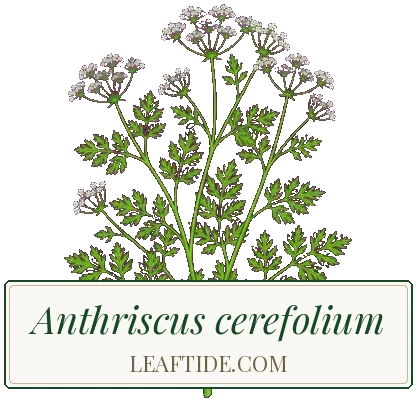
Anthriscus cerefolium
Chervil is a cool-season herb with delicate anise-flavoured leaves that bolts quickly in heat and long days. Sow successionally from late summer for the best autumn and spring harvests, and choose a position in partial shade to prolong the picking season. It grows fast — ready to harvest in six weeks — and needs almost no feeding in fertile soil. An ideal herb for shadier spots where most others struggle.
 In your Leaftide garden

- Hardiness
- Hardy
- Season
- Cool Season
- Harvest
- Continuous Harvest
- Spacing
- 15 cm
- Height
- 30 cm
- Sow depth
- 0.5 cm
- Min. soil temperature
- 5°C+
- Start from
- Seed
- Light
- Part to full shade
- Water
- Moderate
When to Start
Direct sow outdoors as soon as soil reaches 5°C — typically early to mid spring. Hardy enough to tolerate light frosts.
Don't know your frost date? Find it here →
Growth Stages
Approximate days from start
Care Essentials
- Chervil rarely needs feeding in reasonably fertile soil. On poor soil a balanced liquid feed once or twice during the season is sufficient.
- Chervil bolts quickly in heat and long days — sow in succession from late summer for the best autumn and early spring harvests. A position in partial shade prolongs the harvest season considerably.
Growing Conditions
- Min. soil temperature
- 5°C+
- Germination temperature
- 12–18°C
Pet Safety
Spacing & Planting
| Plant spacing | 15 cm |
| Row spacing | 25 cm |
| Sow depth | 0.5 cm |
| Mature height | 30 cm |
| Mature spread | 20 cm |
Pests & Diseases
Pest Aphids
Identification: Soft-bodied insects cluster on young shoots and the undersides of leaves, sucking sap and causing distorted, yellowing growth.
- Blast off with a jet of water or rub off by hand.
- Encourage natural predators such as ladybirds and lacewings.
- Insecticidal soap spray for severe cases.
Pest Carrot Fly
Identification: Larvae of Psila rosae tunnel into the roots, causing wilting and plant death. Adults are attracted by the scent released when leaves are crushed.
- Cover with fine insect mesh from sowing.
- Avoid thinning on warm evenings when adults are most active.
- Rotate sowings to fresh ground each season.
- No effective chemical control available to home gardeners.
Pest Slugs and Snails
Identification: Irregular holes in leaves and slime trails, especially on young seedlings in damp conditions.
- Use copper tape around pots, set beer traps.
- Apply nematode treatment (Phasmarhabditis hermaphrodita) to the soil.
- Hand-pick after dark.
- Ferric phosphate pellets (wildlife-safe).
Disease Powdery Mildew Erysiphe heraclei
Symptoms: White powdery fungal coating on leaves and stems, typically in warm dry spells with cool nights. Affected foliage becomes distorted and eventually dies back.
Treatment: Improve air circulation by thinning plants. Remove badly affected leaves.
Prevention: Avoid overhead watering; water at the base in the morning.
Disease Damping Off Pythium spp. / Rhizoctonia spp.
Symptoms: Seedlings collapse at soil level, most common in cold, wet, poorly drained compost or overly dense sowings.
Treatment: Remove affected seedlings immediately to limit spread.
Prevention: Use fresh, free-draining compost; sow thinly and water from below.
Growing Conditions
| Min. soil temperature | 5°C |
| Germination temperature | 12–18°C |
| Base growth temperature | 5°C |
| Min. daylength to start | 10h |
| Photoperiod sensitivity | long day |
Frequently Asked Questions
- How far apart should I plant Chervil?
- Plant Chervil 15cm apart with 25cm between rows.
- Is Chervil frost hardy?
- Chervil is classified as Hardy.