How to Grow Chokecherry
Prunus virginiana
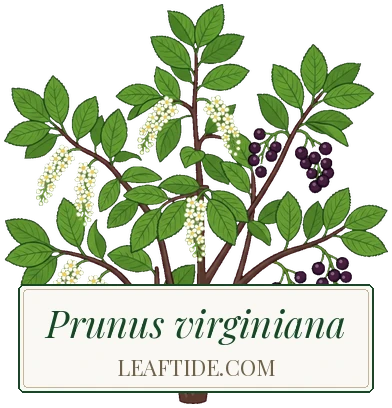
Chokecherry is a tough, cold-hardy North American native that thrives in almost any soil in sun to part shade. Drooping white flower clusters in late spring are followed by small dark purple-black berries excellent for jelly and syrup. Very hardy to -40°C and tolerant of drought, poor soils, and wind. Plant in a spot with good air circulation to reduce black knot disease. Spreads by root suckers — manage these to control spread. Note that leaves, bark, and seeds are toxic (cyanogenic glycosides); keep away from livestock and pets. The ripe berries are safe to eat when cooked.
 In your Leaftide garden

- Height
- 800 cm
- Spread
- 500 cm
- Harvest
- August
- Light
- Full sun to part shade
- Water
- Moderate
- Feed
- Light spring feed
- Prune
- Summer only
Yearly Lifecycle
Care Essentials
Apply a balanced fertiliser in early spring before bud break. Mulch annually with compost. Established trees need minimal feeding.
Watch For
- Black knot fungus
- Tent caterpillars
- Aphids
- Brown rot
Pet Safety
Care Requirements
Light
Full sun to part shade
Grows well in full sun to partial shade. Full sun gives the best fruit production and reduces disease risk. Part shade is tolerated in woodland edges.
Watering
Moderate; drought-tolerant once established
Water regularly for the first 1-2 seasons. Established trees tolerate drought well. Consistent moisture improves fruit quality.
Fertilizing
Light spring feed; mulch annually
Apply a balanced fertiliser in early spring. Annual compost mulch is sufficient for established plants. Avoid excess nitrogen.
Pruning
Summer only; remove black knot immediately
Prune in summer (June to August), never in winter, because winter cuts let in silver leaf disease. Remove dead, diseased, and crossing branches. Inspect regularly for black knot galls and remove promptly.
Spacing
4m between plants
Allow 4m between plants. Suckers spread further so maintain a buffer near paths, walls, and other plants.
Growing Tips
Toxic foliage — keep livestock away
Wilted leaves are especially dangerous to horses, cattle, and sheep due to cyanogenic glycosides. The ripe cooked berries are safe for human consumption.
Black knot prevention
Plant in a location with good air circulation and full sun. Remove any warty black galls immediately by cutting 15cm below the affected area. Burn prunings.
Outstanding wildlife plant
Berries attract over 40 species of birds. The early flowers are valuable for native bees. Consider planting a small thicket in a wildlife garden corner.