How to Grow Forget-me-not
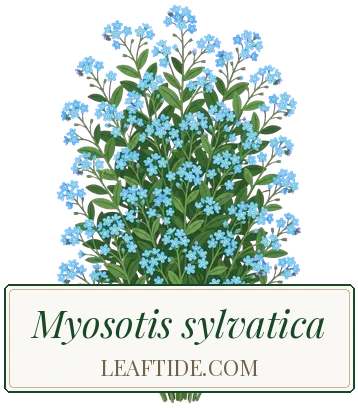
Myosotis sylvatica
Forget-me-nots are hardy biennials that thrive in partial shade or full sun with moist, well-drained soil. Sow in summer for flowers the following spring, or buy as autumn or spring bedding plants. They self-seed prolifically — once in your garden they return year after year. Plant under tulips and spring bulbs for a classic cottage combination. Pull up after flowering to prevent mildew spread, but shake the plants over the soil first to scatter seeds. No feeding needed; average garden soil suits them perfectly.
 In your Leaftide garden
 - Hardiness
- Hardy
- Season
- Cool Season
- Harvest
- Continuous Harvest
- Spacing
- 15 cm
- Height
- 30 cm
- Sow depth
- 0.5 cm
- Min. soil temperature
- 5°C+
- Start from
- Seed
- Light
- Full sun to part shade
- Water
- Moderate
When to Start
Sow from late spring to midsummer, in trays or where it is to flower. It only grows leaves in its first year and flowers the following spring or summer.
Don't know your frost date? Find it here →
Growth Stages
Approximate days from start
Care Essentials
- Rarely needed. Thrives in average to moist soil — avoid rich feeding which produces leafy growth at the expense of flowers.
- Classic spring bedding biennial. Self-seeds prolifically — once established in a garden it returns year after year. One of the few flowers that tolerates partial shade.
Growing Conditions
- Min. soil temperature
- 5°C+
- Germination temperature
- 15–18°C
- When to Start
- Sow from late spring to midsummer, in trays or where it is to flower. It only grows leaves in its first year and flowers the following spring or summer.
Want your full season plan with reminders? Set up your garden free


Spacing & Planting
| Plant spacing | 15 cm |
| Row spacing | 25 cm |
| Sow depth | 0.5 cm |
| Mature height | 30 cm |
| Mature spread | 25 cm |
Classic spring bedding plant. Self-seeds prolifically — allow some plants to set seed for natural drifts. Shade tolerant; ideal for underplanting tulips and spring bulbs.
Pests & Diseases
Pest Aphids
Identification: Clusters of small green insects on shoot tips and flower buds, causing distorted growth and sticky honeydew
- Blast off with a strong jet of water
- Spray with fatty acid-based insecticide
- Encourage ladybirds, lacewings and hoverflies
- Spray with a contact insecticide containing deltamethrin or lambda-cyhalothrin
Pest Slugs and Snails
Identification: Irregular holes in young leaves and slime trails around plants, worst in wet weather
- Use beer traps or copper tape barriers
- Apply organic slug pellets (ferric phosphate)
- Encourage natural predators such as hedgehogs and ground beetles
- Ferric phosphate-based pellets
Disease Powdery Mildew
Symptoms: White powdery coating on leaves and stems, causing yellowing and collapse — very common after peak flowering
Treatment: Pull up and compost affected plants once flowering is over. Do not leave deteriorating plants in place
Prevention: Remove plants promptly after flowering, ensure good spacing, and avoid overhead watering
Disease Downy Mildew
Symptoms: Yellow patches on upper leaf surfaces with grey-purple fuzzy growth on the undersides
Treatment: Remove and dispose of affected leaves. Improve air circulation around plants
Prevention: Avoid overhead watering, space plants well, and do not overcrowd
Growing Conditions
| Min. soil temperature | 5°C |
| Germination temperature | 15–18°C |
| Base growth temperature | 4°C |
| Min. daylength to start | 9h |
| Photoperiod sensitivity | day neutral |
Frequently Asked Questions
- How far apart should I plant Forget-me-not?
- Plant Forget-me-not 15cm apart with 25cm between rows.
- When does Forget-me-not flower?
- Forget-me-not flowers the year after sowing. It spends its first year growing leaves and flowers the following spring or summer.
- Is Forget-me-not frost hardy?
- Forget-me-not is classified as Hardy.