How to Grow Kentucky Wisteria
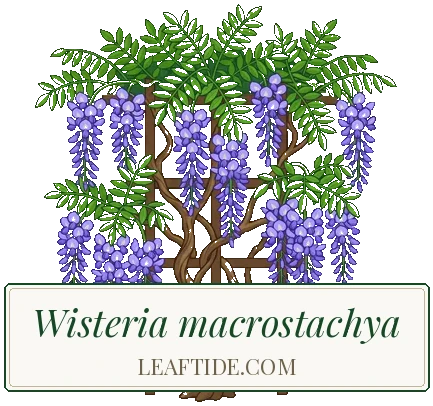
Wisteria macrostachya
Kentucky wisteria is the hardiest of all wisteria species (-35°C), ideal for northern and exposed gardens. Compact (6-8m) and well-behaved like American wisteria but even tougher. Flowers on new wood so blooms reliably from year 2-3. The famous 'Blue Moon' cultivar can rebloom up to 3 times per season with cascading lavender-blue fragrant racemes. Full sun, moist well-drained soil, and a moderate support structure. Less vigorous than Asian types, safe for garden structures. Less to prune than Chinese or Japanese wisteria, with a summer and a winter cut.
 In your Leaftide garden

- Height
- 500 cm
- Spread
- 350 cm
- Spacing
- 200 cm
- Flowers
- May - June
- Light
- Full sun to part shade
- Water
- Moderate
- Feed
- High-potash feed in spring
- Prune
- Summer and winter prune
Yearly Lifecycle
Care Essentials
Spring with a high-potash fertiliser (e.g. tomato feed). Avoid high-nitrogen feeds which promote leaves over flowers.
Watch For
- Aphids
- Powdery mildew
- Leaf spot
Companions
Clematis, Roses, Alliums
Pet Safety
Care Requirements
Light
Full sun; south-facing position ideal
Full sun is essential for reliable and repeat flowering. A south or south-west facing position maximises bloom potential. Will tolerate partial shade but with reduced flowering.
Watering
Regular when young; drought-tolerant once established
Water regularly during the first two years. Established plants are fairly drought-tolerant but benefit from watering during dry spells, particularly during bud formation.
Fertilizing
High-potash feed in spring; avoid nitrogen
Feed in spring with a high-potash fertiliser such as tomato feed. Avoid high-nitrogen feeds which promote leafy growth at the expense of flowers.
Pruning
Summer and winter prune
In July-August, after flowering, cut this year's whippy shoots back to five or six leaves. In January-February, shorten the same shoots to two or three buds, about 2.5-5 cm from the older wood, and remove dead, damaged or crossing branches.
Support
Moderate support; safe for light structures
Needs a support structure but safe for modest pergolas, arches, and fences. Much lighter than Asian wisteria. Standard garden wires or trellis are sufficient.
Growing Tips
The hardiest wisteria
Hardy to -35°C, the toughest wisteria available. Flower buds survive late spring frosts that would destroy Asian wisteria blooms.
Repeat blooming
The 'Blue Moon' cultivar is famous for reblooming up to 3 times per season, providing months of cascading lavender-blue flowers.
Flowers on new wood
Like American wisteria, flowers on new wood so blooms reliably within 2-3 years of planting. No decade-long wait.
Compact and manageable
At 6-8m, compact enough for modest garden structures. Will not damage buildings or overwhelm supports like Asian species.
Spacing & Planting
| Plant spacing | 200 cm |
| Row spacing | 200 cm |
| Mature height | 500 cm |
| Mature spread | 350 cm |
Similar in size to American wisteria. Compact and manageable on standard garden structures. Less vigorous than Asian species.