How to Grow Okra
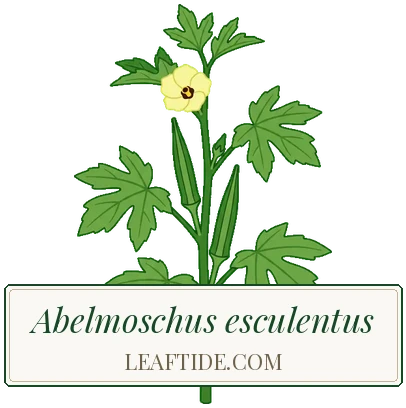
Abelmoschus esculentus
Okra is a tall, heat-loving vegetable that produces edible pods in warm conditions with full sun and well-drained fertile soil. Soak seeds overnight before sowing to improve germination, and start indoors if your season is short. The key to a long productive harvest is picking pods every 2–3 days at 5–8 cm — a single overripe pod left on the plant signals it to stop producing.
 In your Leaftide garden
 - Hardiness
- Tender
- Season
- Warm Season
- Harvest
- Continuous Harvest
- Spacing
- 40 cm
- Height
- 150 cm
- Sow depth
- 2 cm
- Min. soil temperature
- 18°C+
- Start from
- Seed
- Light
- Full sun
- Water
- Moderate
When to Start
Start seeds indoors 5 weeks before your last frost date. Transplant outdoors once night temperatures stay above 15°C and soil has warmed to at least 18°C.
Don't know your frost date? Find it here →
Growth Stages
Approximate days from start
Care Essentials
- Balanced liquid feed every two weeks once flowering begins. Okra is a heavy feeder in rich, well-drained soil.
- Harvest pods every 2–3 days when 5–8 cm long — a single overripe pod left on the plant signals it to stop producing new ones. Soak seeds overnight before sowing to improve germination rates.
Growing Conditions
- Min. soil temperature
- 18°C+
- Germination temperature
- 21–30°C
- Sow indoors
- —
- Transplant out
- —
- First harvest
- —
Want your full season plan with reminders? Set up your garden free


Spacing & Planting
| Plant spacing | 40 cm |
| Row spacing | 60 cm |
| Sow depth | 2 cm |
| Mature height | 150 cm |
| Mature spread | 45 cm |
Okra grows tall and upright (up to 1.5 m). In cooler climates, grow against a warm, sunny wall or under cover for best results.
Pests & Diseases
Pest Aphids
Identification: Clusters of small soft-bodied insects on shoot tips and leaf undersides, sticky honeydew, curled or distorted new growth.
- Knock off with a strong jet of water
- Introduce ladybirds or lacewing larvae
- Apply neem oil spray
- Insecticidal soap spray
- Approved systemic aphicide
Pest Whitefly
Identification: Tiny white-winged insects that fly up in a cloud when plants are disturbed. Leaves develop sticky honeydew and sooty mould. Yellowing and reduced vigour.
- Hang yellow sticky traps above plants
- Introduce Encarsia formosa parasitic wasp (under glass)
- Apply neem oil or insecticidal soap spray to leaf undersides
- Pyrethrin-based insecticide spray
- Approved whitefly contact insecticide
Pest Red Spider Mite
Identification: Fine webbing on leaves and stems. Leaves develop pale mottled speckling then turn bronze and dry out. Tiny orange-red mites visible with a hand lens.
- Increase humidity by misting plants — mites thrive in hot, dry conditions
- Introduce Phytoseiulus persimilis predatory mite (under glass)
- Apply neem oil spray to all leaf surfaces
- Approved miticide containing abamectin or bifenazate
Pest Flea Beetles
Identification: Tiny dark jumping beetles that chew small round holes (shot-holes) in leaves. Seedlings and young plants are most vulnerable.
- Fleece or mesh row covers on young plants
- Sticky traps near soil level
- Diatomaceous earth around plant bases
- Pyrethrin-based insecticide
- Approved contact insecticide
Pest Corn Earworm
Identification: Green, brown or pink caterpillars up to 4 cm long that bore into pods and feed on developing seeds. Frass visible at entry holes.
- Hand-pick caterpillars
- Bacillus thuringiensis (Bt) spray
- Encourage parasitic wasps
- Approved caterpillar insecticide
- Spinosad-based spray
Disease Fusarium Wilt Fusarium oxysporum f. sp. vasinfectum
Symptoms: Lower leaves yellow and wilt, often on one side of the plant first. Brown discolouration visible inside stems when cut. Plants may be stunted or collapse entirely.
Treatment: Remove and destroy affected plants immediately. No chemical cure once established. Solarise the soil in summer before replanting.
Prevention: Use resistant varieties where available. Practise a 3–4 year crop rotation. Avoid overwatering and ensure good soil drainage.
Disease Powdery Mildew Erysiphe cichoracearum
Symptoms: White powdery coating on leaves and stems, leaves yellow and drop prematurely, reduced pod production. Most common in late summer.
Treatment: Remove badly affected leaves. Apply sulphur-based fungicide or potassium bicarbonate spray. Improve air circulation around plants.
Prevention: Maintain good plant spacing. Avoid overhead watering — water at the base only. Do not allow plants to dry out completely, as drought stress increases susceptibility.
Disease Root-Knot Nematode Meloidogyne spp.
Symptoms: Stunted growth, wilting in hot weather despite adequate water, yellowing leaves. Swollen galls visible on roots when plants are pulled up.
Treatment: Remove and destroy affected plants including roots. Solarise soil. No effective chemical treatment for home gardens.
Prevention: Rotate crops on a 3-4 year cycle, add organic matter to encourage beneficial soil organisms, use resistant varieties where available, plant marigolds as a trap crop.
Growing Conditions
| Min. soil temperature | 18°C |
| Germination temperature | 21–30°C |
| Base growth temperature | 15°C |
| Min. daylength to start | 11h |
| Photoperiod sensitivity | day neutral |
Frequently Asked Questions
- How far apart should I plant Okra?
- Plant Okra 40cm apart with 60cm between rows.
- When can I harvest Okra?
- Okra is ready to harvest approximately 55 days after transplanting.
- Is Okra frost hardy?
- Okra is classified as Tender.