How to Grow Scented Geranium
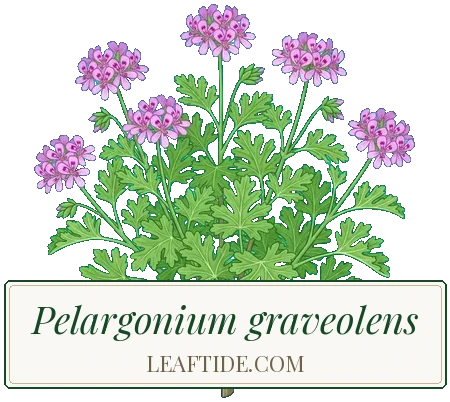
Pelargonium graveolens
Scented geranium is a tender perennial grown for its intensely fragrant, deeply lobed foliage rather than its small pink-purple flowers. It thrives in full sun with very free-draining compost and prefers to dry out slightly between waterings. In temperate climates it must come indoors before the first frost — a bright windowsill at 5°C or above will see it through winter. Pinch tips regularly for a bushy shape and take cuttings in late summer as insurance. The Citrosum variety carries a strong lemon-citronella scent and is often sold as a mosquito-repelling plant.
 In your Leaftide garden

- Height
- 80 cm
- Spread
- 55 cm
- Flowers
- May - October
- Light
- Full sun
- Water
- Low
- Feed
- Every two weeks in spring and summer
- Prune
- Pinch tips regularly
Yearly Lifecycle
Care Essentials
Feed every two weeks with a balanced liquid fertiliser at half strength from spring through summer. Reduce to monthly in early autumn and stop completely in winter.
Watch For
- Vine weevil (notched leaf margins, root damage)
- Botrytis (grey mould in humid conditions)
- Whitefly
- Aphids on young shoots
- Rust fungus (orange pustules on leaf undersides)
Pet Safety
Care Requirements
Light
Full sun
Needs at least 4-6 hours of direct sun daily. In lower light the plant becomes leggy and fragrance diminishes. Ideal on a south-facing windowsill indoors or in a sunny sheltered spot outdoors.
Watering
Allow to dry slightly between waterings
Water when the top 2-3 cm of compost feels dry. Reduce to minimal watering in winter. Never let the plant sit in water — root rot is a common cause of failure.
Fertilizing
Every two weeks in spring and summer
Use a balanced liquid fertiliser at half strength every two weeks during the growing season. Stop feeding in autumn and winter.
Pruning
Pinch tips regularly; cut back hard in spring
Pinch growing tips every few weeks to promote bushiness. Leggy or woody plants can be cut back by up to half in early spring to rejuvenate. Always cut to just above a leaf node.
Temperature
Frost-tender; minimum 5°C
Bring pots indoors before the first frost. Overwinter in a cool, bright, frost-free location (5-10°C). Too much warmth in winter causes weak, pale growth.
Growing Tips
Drainage is essential
Use a gritty, free-draining compost — a 50/50 mix of multipurpose and perlite works well. Wet roots are the main cause of failure.
Pinch for bushiness
Pinch out growing tips every few weeks to keep the plant compact and encourage branching. Leggy plants can be cut back by half in spring.
Bring indoors before frost
These are frost-tender. Move pots inside to a cool, bright, frost-free spot before temperatures drop below 5°C. Reduce watering to near-nothing over winter.
Release the fragrance
The scent is held in glands on the leaf surface — brush or gently squeeze a leaf to release the aroma. Harvest leaves for potpourri, sachets, or flavouring.
Pests & Diseases
Pest Vine Weevil
Identification: Adults notch leaf margins; larvae eat roots, causing sudden wilting and plant collapse, especially in pots.
- Apply nematode biological control (Steinernema kraussei) in spring or autumn, when the soil is moist and above 5°C.
- Pick off adults by hand at night.
Pest Whitefly
Identification: Tiny white insects on leaf undersides that weaken the plant and excrete sticky honeydew.
- Hang yellow sticky traps near the plants.
- Spray with insecticidal soap or neem oil.
- Improve air circulation.
Pest Aphids
Identification: Clusters of small soft insects on new growth, distorting leaves and excreting honeydew.
- Pinch off heavily infested tips.
- Spray with insecticidal soap or a strong jet of water to dislodge the colonies.
Disease Botrytis (Grey Mould) Botrytis cinerea
Symptoms: Fuzzy grey fungal growth on stems, leaves or flowers in cool, humid, poorly ventilated conditions.
Treatment: Remove affected parts promptly. If it keeps spreading, apply a copper-based fungicide.
Prevention: Improve air circulation, reduce humidity and avoid watering from overhead.
Disease Pelargonium Rust Puccinia pelargonii-zonalis
Symptoms: Orange-brown pustules on leaf undersides with yellow spots on the upper surface; causes early leaf drop.
Treatment: Remove and bin affected leaves immediately. Treat with a suitable fungicide if severe.
Prevention: Avoid wetting the foliage, give plants space for air flow and check new plants for pustules before bringing them home.
Popular Varieties
Citrosum
[object Object]