How to Grow Sassafras
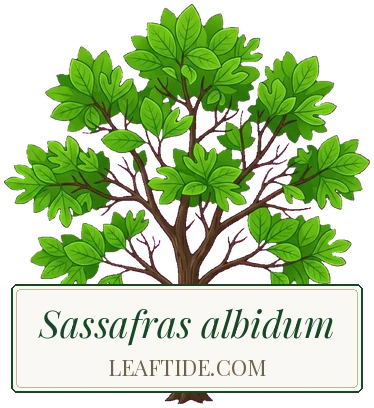
Sassafras albidum
Sassafras is a fast-growing native tree prized for its spectacular orange, red, and yellow autumn colour and distinctive mitten-shaped leaves. Plant in full sun to partial shade in moist, well-drained, slightly acidic soil. Tolerates a wide range of conditions once established but dislikes waterlogged ground. Remove root suckers regularly if a single-trunk specimen is desired. Minimal pruning needed beyond removing dead or crossing branches in late winter.
 In your Leaftide garden

- Height
- 1500 cm
- Spread
- 900 cm
- Light
- Full sun to part shade
- Water
- Moderate
- Feed
- Generally not needed
- Prune
- Minimal
Yearly Lifecycle
Care Requirements
Light
Full sun to partial shade
Grows well in full sun or partial shade. Develops a broader canopy in full sun and a more open, layered form as an understory tree. Does not tolerate deep shade.
Watering
Regular when young; drought-tolerant once established
Water deeply once or twice a week during the first growing season to establish the deep taproot. Once established, sassafras is quite drought-tolerant and rarely needs supplemental water except in prolonged dry spells.
Fertilizing
Generally not needed; light feed if soil is poor
Do not fertilize in the first year after planting. Established trees in average soil need no fertilizer. In poor soils, apply a balanced slow-release fertilizer in early spring.
Pruning
Minimal; remove suckers for single-trunk form
Prune dead, damaged, or crossing branches in late winter while dormant. Remove root suckers regularly at ground level if a single-trunk specimen tree is desired rather than a thicket.
Spacing
7-10 m apart
Space 7-10 m apart for specimen trees. The mature spread is 7-12 m depending on growing conditions. Allow room for the spreading root system which produces suckers.