How to Grow Chilean Guava
Ugni molinae
Plant in acidic to neutral, well-drained soil in a sheltered spot with sun to partial shade. Water regularly until established. Feed with ericaceous fertiliser in spring. Harvest berries when dark red and slightly soft in autumn. Protect from hard frosts in exposed positions.
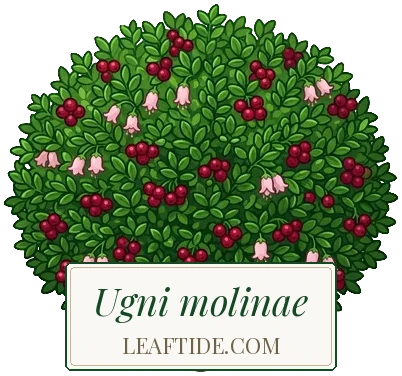
 In your Leaftide garden

- Height
- 150 cm
- Spread
- 100 cm
- Harvest
- September - October
- Light
- Full sun to part shade
- Water
- Moderate
- Feed
- Ericaceous feed once or twice a year
- Prune
- Minimal pruning in late winter or early spring
Yearly Lifecycle
Care Essentials
Feed in spring with an ericaceous (acid-loving) fertiliser. A second light feed in midsummer supports fruit development. Avoid alkaline feeds.
Watch For
- Scale insects
- Red spider mite (under cover)
- Frost damage to flower buds
- Chlorosis (alkaline soil)
Companions
Blueberries, Heather, Rhododendron, Cranberry
Care Requirements
Light
Full sun to partial shade
Prefers full sun to ripen fruit well. Tolerates partial shade but yields will be lower. A south- or west-facing sheltered wall is ideal.
Watering
Regular watering, especially in containers
Water regularly during the first growing season to establish. Once established, moderately drought-tolerant but water in dry spells, especially for container plants which dry out quickly.
Fertilizing
Ericaceous feed once or twice a year
Feed with an ericaceous (acidifying) fertiliser in early spring as growth begins. A second light feed in midsummer can boost fruit development. Avoid high-nitrogen feeds which promote leafy growth at the expense of fruit.
Pruning
Minimal pruning in late winter or early spring
Minimal pruning needed. Remove dead, damaged, or crossing branches in late winter or early spring before growth starts. Lightly tip-prune after fruiting to maintain a compact shape. Avoid hard pruning.
Overwintering
Hardy to -10°C; protect in exposed sites
Hardy to approximately -10°C once established, but flower buds and early growth are frost-sensitive. In colder regions or exposed sites, protect with horticultural fleece during hard frosts. Container plants should be moved to a frost-free but cool position.
Growing Tips
Keep soil acidic
Chilean guava demands acidic to neutral soil (pH 4.5–6.5). Test annually and apply sulphur chips or ericaceous compost if pH creeps up. Alkaline soil causes chlorosis and poor fruiting.
Excellent in containers
Grows well in a 40 cm+ pot of ericaceous compost. Containers let you move the plant under cover during hard frosts and control soil chemistry precisely. Repot every 2–3 years.
Choose a sheltered, sunny spot
Plant against a south- or west-facing wall for the warmth needed to ripen fruit. Flowers appear in summer and fruit ripens in autumn — both benefit from a sheltered microclimate that protects flower buds from late frosts.
Self-fertile — no partner required
A single plant sets fruit freely. For a heavier crop, plant two or more together to improve cross-pollination, but one is sufficient for a worthwhile harvest.
Pests & Diseases
Pest Scale Insects
Identification: Brown or white waxy bumps on stems and leaf undersides; sticky honeydew and sooty mould.
- Scrub off with a soft brush and soapy water.
- Apply a plant-oil spray or neem in spring when crawlers are active.
- Check regularly on sheltered plants.
Pest Red Spider Mite
Identification: Fine pale stippling on leaves, fine webbing on undersides; more common under cover or in hot, dry summers.
- Mist foliage to raise humidity.
- Introduce Phytoseiulus persimilis as a biological control under glass.
- Remove badly affected leaves.
Pest Vine Weevil
Identification: Irregular notches on leaf margins (adults); sudden wilting as larvae eat roots (especially in containers).
- Apply nematode drench (Steinernema kraussei) to compost in autumn.
- Use vine-weevil-resistant compost or grit top-dressing to deter egg-laying.
Disease Iron / Manganese Chlorosis
Symptoms: Young leaves yellow between the veins while veins stay green; caused by alkaline soil locking out iron and manganese.
Treatment: Correct soil pH with sulphur or ericaceous compost. Apply chelated iron or sequestered iron foliar feed as a quick fix.
Prevention: Grow in acidic to neutral, humus-rich soil, or in a container of ericaceous compost. Water with rainwater where tap water is hard.
Disease Frost Damage to Flower Buds
Symptoms: Flower buds or open flowers turn brown and drop after a late frost; fruit set is poor that season.
Treatment: Protect with horticultural fleece during forecast frosts while in bud. A sheltered south- or west-facing wall significantly reduces risk.
Prevention: Plant against a sheltered wall and avoid frost pockets. Move container plants under cover when a late frost is forecast.