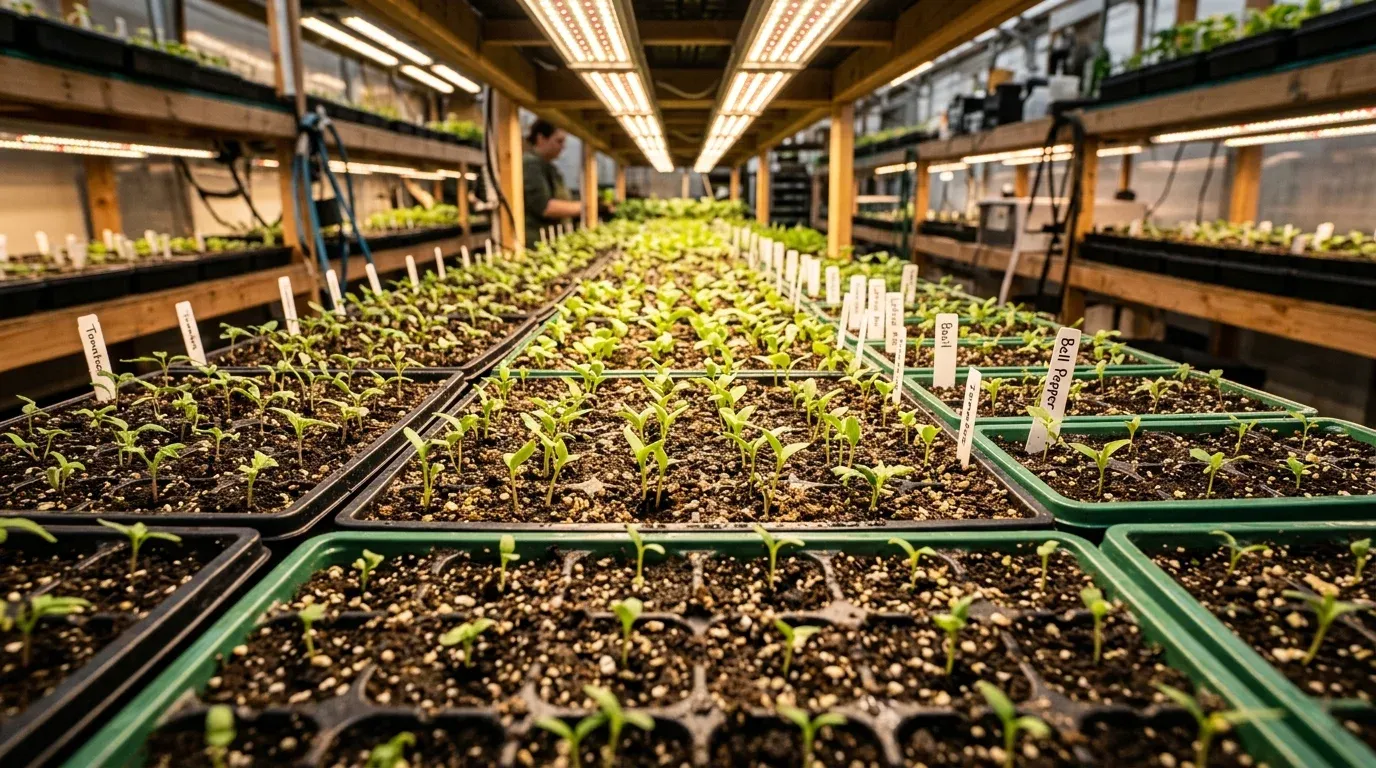
Most vegetables germinate somewhere between 7°C and 30°C (45-86°F). Cool-season crops like peas, spinach, and broad beans sprout from as low as 8°C (46°F). Warm-season crops like tomatoes, peppers, and courgettes need at least 20-21°C (68-70°F) and will not germinate reliably in cold soil. Check soil temperature with a probe thermometer; air temperature in spring is almost always higher than the soil.
Getting seeds to sprout is not just about keeping them moist and waiting. Soil temperature is the most important variable in the germination equation, and it is the one most gardeners overlook.
A seed contains all the genetic instructions for a plant, but those instructions only activate within a specific temperature window. Too cold and the seed sits dormant, slowly rotting. Too hot and the embryo dies before it can emerge. In the right range, enzymes activate, the seed coat softens, and the radicle pushes out.
Understanding the difference between minimum and maximum germination temperature changes how you plan your sowing. Minimum temperature is the threshold below which germination will not occur. Maximum temperature is the upper limit beyond which germination fails, seeds may enter secondary dormancy, or the embryo is damaged by heat. The range between them is your working window.
The table below pulls germination temperature data directly from Leaftide’s plant research database. Use it to decide whether to sow directly into the ground, to wait, or to start seeds indoors with supplemental heat.
Germination temperature reference chart
Warm-season crops
These vegetables need soil temperatures in the warm range (typically 20°C / 68°F and above) to germinate reliably. The lower limits in the table represent the practical floor for reliable sowing, not the absolute biological minimum. In most temperate climates, soil does not reach these temperatures until late spring. Start them indoors on a heat mat if you want an early harvest, or wait until the soil has warmed before direct sowing.
| Vegetable | Lower Limit °C | Lower Limit °F | Upper Limit °C | Upper Limit °F | Notes |
|---|---|---|---|---|---|
| Tomato | 20 | 68 | 28 | 82 | Start indoors on heat mat |
| Pepper | 21 | 70 | 30 | 86 | Slowest of the nightshades; start earliest |
| Chilli | 21 | 70 | 30 | 86 | Same window as pepper |
| Aubergine | 21 | 70 | 30 | 86 | Start indoors; transplant after last frost |
| Courgette | 20 | 68 | 28 | 82 | Direct sow after last frost or start indoors |
| Pumpkin | 20 | 68 | 28 | 82 | Direct sow once soil is warm |
| Cucumber | 20 | 68 | 30 | 86 | Start indoors or direct sow in warm soil |
| Sweetcorn | 15 | 59 | 25 | 77 | Direct sow only; resents root disturbance |
| French bean | 15 | 59 | 25 | 77 | Direct sow after last frost |
| Basil | 20 | 68 | 25 | 77 | Narrow range; needs warmth to avoid damping off |
Cool-season crops
These crops germinate at much lower soil temperatures, making them suitable for early spring or autumn sowing directly into the ground. Many prefer the cool end of their range and will struggle or bolt if they germinate into warm summer soil.
| Vegetable | Lower Limit °C | Lower Limit °F | Upper Limit °C | Upper Limit °F | Notes |
|---|---|---|---|---|---|
| Broccoli | 15 | 59 | 25 | 77 | Start indoors or direct sow in cool soil |
| Cauliflower | 15 | 59 | 25 | 77 | Start indoors; sensitive to root disturbance |
| Cabbage | 15 | 59 | 25 | 77 | Start indoors or direct sow in spring |
| Kale | 10 | 50 | 25 | 77 | Direct sow spring or late summer |
| Pak choi | 15 | 59 | 25 | 77 | Bolts in heat; sow spring or autumn |
| Lettuce | 10 | 50 | 20 | 68 | Fails above 20°C; autumn sowings reliable |
| Spinach | 8 | 46 | 18 | 64 | Narrow max; prefers cool conditions |
| Rocket | 10 | 50 | 20 | 68 | Fast; bolt-prone in warm soil |
| Chard | 10 | 50 | 25 | 77 | Tolerant range; direct sow spring to early summer |
| Onions | 10 | 50 | 25 | 77 | Start indoors early or direct sow |
| Carrot | 7 | 45 | 30 | 86 | Wide range; direct sow only |
| Beetroot | 10 | 50 | 25 | 77 | Each seed cluster produces multiple plants |
| Parsnip | 10 | 50 | 18 | 64 | Narrow max; use fresh seed for best results |
| Radish | 8 | 46 | 25 | 77 | Among the fastest-germinating vegetables |
| Garden peas | 8 | 46 | 18 | 64 | Direct sow early spring |
| Broad beans | 8 | 46 | 15 | 59 | Narrow max; direct sow autumn or early spring |
| Celery | 15 | 59 | 21 | 70 | Very narrow range; needs light to germinate |
| Parsley | 15 | 59 | 25 | 77 | Notoriously slow; soak seed before sowing |
Leek and fennel are not yet in the database and are excluded rather than estimated.
Warm-season vs cool-season crops
The divide between warm-season and cool-season crops is one of the most useful frameworks in vegetable growing, and it maps almost perfectly onto germination temperature.
Cool-season crops evolved in temperate climates where spring and autumn are the productive seasons. Their seeds are built to germinate in cool, moist soil. Peas, broad beans, spinach, and carrots can push out roots in soil barely above freezing. This makes them ideal for early spring sowing directly into the ground, often weeks before the last frost date. Many of them prefer cooler growing conditions and will bolt if they germinate into warm summer soil.
Warm-season crops come from tropical and subtropical origins. Their seeds refuse to germinate in cold soil, and seedlings that do emerge in cool conditions sulk rather than grow. Tomatoes, peppers, cucumbers, and courgettes want warm soil from the moment the seed touches it. In most of northern Europe and the northern US, that means starting them indoors under controlled temperatures and transplanting once conditions are right.
The practical consequence is that these two groups require completely different sowing strategies.
Cool-season crops are generally direct sown outdoors as early as the soil can be worked, sometimes with a cloche or cold frame to take the edge off. Because they tolerate frost, they go in before the last frost date, sometimes well before it. Getting them in early also means they finish before summer heat causes problems.
Warm-season crops almost always start indoors. A propagator or heat mat brings soil temperature up to the 20-25°C (68-77°F) range even when outdoor temperatures are far too cold. The seedlings grow on a windowsill or under grow lights, then move outside only after the last frost date has passed and the soil has warmed. For timing your transplant date, the Frost Date Finder shows your local last frost date and safe planting windows.
Practical tips for hitting the right temperature
Heat mats and propagators
For warm-season crops, a seedling heat mat is the single most useful piece of equipment. A thermostat-controlled mat sits under your seed trays and holds soil temperature at a set point, typically 24-26°C (75-79°F) for most warm-season crops. Without one, you are at the mercy of your windowsill temperature, which is rarely warm enough for reliable tomato or pepper germination.
Heated propagators work on the same principle but enclose the trays in a lid that retains humidity. The combination of bottom heat and high humidity is close to ideal for most seeds.
Once seeds have germinated, most warm-season seedlings do not need the heat mat to maintain full germination temperature. Seedlings grow well at 18-20°C (64-68°F). The mat is most valuable in the first one to two weeks while seeds are breaking dormancy.
Measuring soil temperature
A soil thermometer (a probe you push 5-8cm into the ground) tells you what seeds are actually experiencing. Air temperature can be misleading: a warm sunny day in early March might push air temperature to 14°C (57°F) while soil 10cm down is still 6°C (43°F). Seeds respond to the soil, not the air.
Take readings in the morning before sun has warmed the surface, and average several readings across the bed. Soil temperature changes slowly, so check over several consecutive days rather than acting on a single reading.
Raised beds warm up faster than ground-level beds because they are exposed to air on all sides. If you want to start direct sowing earlier, a raised bed in a sheltered south-facing position is your fastest option.
Why cold soil causes damping off
Sowing warm-season seeds into cold soil does not just slow germination; it creates conditions for damping off, a fungal problem where seedlings collapse at the base and die shortly after emerging. The fungi responsible thrive in cool, wet soil, and seeds that germinate slowly in cold conditions are exposed to them for longer.
This is why the minimum temperature in the table matters. It is not just the threshold for germination; it is roughly the threshold below which the risk of fungal rot increases significantly. Waiting for soil to warm to at least the minimum temperature before sowing warm-season crops is not just about speed. It reduces losses.
Fresh seed for parsnips
Parsnip has one of the narrowest maximum germination temperatures in the table at 18°C (64°F), and is notoriously slow and unreliable. Using fresh seed each year (parsnip seed viability drops sharply after one season) and sowing into soil that has not yet warmed above its maximum gives the best results. Many gardeners sow parsnips in February or early March precisely because the soil is still cool enough.
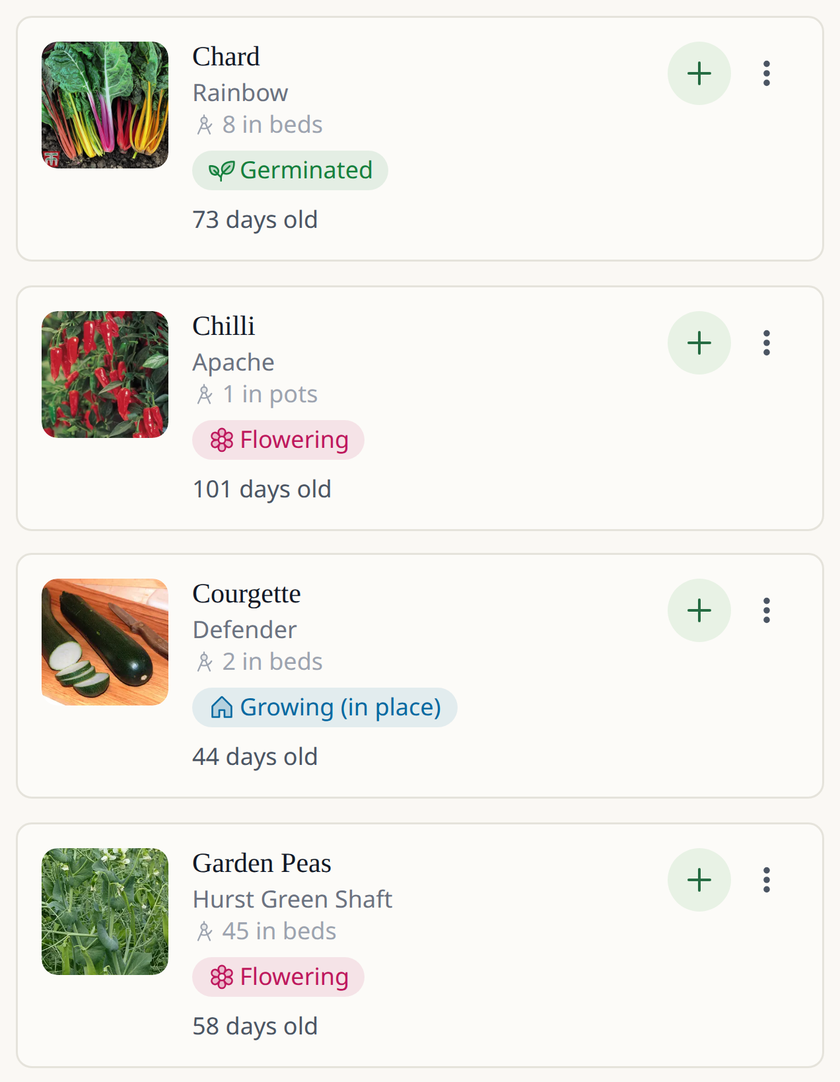
Know when to sow every crop in your garden.


Methodology note
Minimum and maximum germination temperatures from Leaftide’s plant research database, compiled from seed catalogue specifications and horticultural extension services. Optimal temperatures and days-to-germinate vary by variety and conditions and are not included here.
Where a crop’s germination temperature data is not yet in the database (leek, fennel), it is excluded from the table rather than estimated. Values represent typical ranges for the species; individual varieties and seed lots may vary.
Cite this data
The germination temperature data on this page is released under CC BY 4.0. You are free to share and adapt it for any purpose, including commercial use, as long as you credit Leaftide.
How to cite: Leaftide (2026). Vegetable Germination Temperatures: Complete Reference Chart. Retrieved from https://leaftide.com/learn/vegetable-germination-temperatures/
Last updated: September 2026.
For more context on how soil and air temperature interact during the growing season, see the last frost date guide. To calculate your local sowing windows for any crop, use the Frost Date Finder.